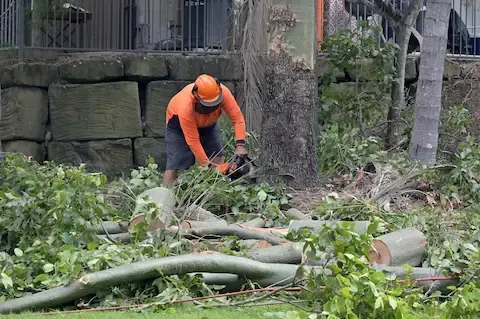
Crown Reduction for Mature Trees in Longmont CO Yards
Mature trees in Longmont yards carry decades of growth, and that accumulated canopy can become a liability when Front Range windstorms roll through. Crown reduction is one of the most effective ways to manage that risk without sacrificing the tree's structure or long-term health. Done correctly, it lowers the wind sail effect, reduces mechanical stress on older limbs, and extends the functional life of trees that would otherwise need removal. Done poorly, it looks exactly like topping — and causes nearly the same damage. Understanding the difference matters before you schedule any work on a tree you've spent years watching grow.
What Crown Reduction Actually Means
Crown reduction is a structural pruning technique that reduces the overall height and spread of a tree's canopy by making cuts at lateral branches capable of assuming the terminal role. That last phrase is the critical part. Each cut is placed at a fork where a smaller but still healthy branch angles outward and upward, allowing that branch to become the new leader for that section of the canopy. The tree retains its natural silhouette at a slightly reduced scale, and the growth points remain intact.
Topping, by contrast, cuts main stems at arbitrary points with no lateral target. The result is large, exposed wounds that invite decay, plus explosive epicormic regrowth — the dense, weakly attached sprouts you see bristling from topped trees. Crown reduction avoids both problems when a qualified arborist controls the cut placement. It is not a shortcut, and it cannot compress ten years of unchecked growth into one afternoon without consequences.
Why Longmont's Growing Conditions Make This Pruning Particularly Relevant
Longmont sits at roughly 4,979 feet along the eastern edge of the Front Range, where trees grow vigorously through warm summers and then face sudden late-season windstorms, early snowloads, and the occasional October dump that bends canopies before leaves have dropped. Mature cottonwoods near the St. Vrain corridor, large silver maples in established neighborhoods west of Main Street, and the Siberian elms that colonized older lots throughout town all develop wide, heavy canopies that catch wind and snow in ways that smaller trees simply don't.
These species also respond to improper pruning in predictable ways. Cottonwoods compartmentalize decay reasonably well but produce vigorous water sprouts after topping that become structural hazards within a few seasons. Silver maples are fast growers that benefit from periodic crown management but will generate dense epicormic growth if cuts are too large or too numerous in a single session. Tree Trimming for mature specimens in Longmont means accounting for species physiology alongside local climate stress — neither consideration is optional.
How the Reduction Process Works in Practice
A qualified arborist begins with an assessment of the tree's structure before any climbing gear goes on. They identify the primary scaffold branches, look for included bark unions that signal weak attachment, and estimate how much live canopy can be removed without crossing the one-third threshold that triggers excessive stress response. Crown reduction almost always stays under twenty percent of live crown removal in a single session for mature specimens.
Cuts are made with a three-cut technique on any branch large enough to strip bark if it falls before the final cut severs it. The arborist works from the outer canopy inward, which keeps the work zone clear and allows continuous visual assessment of how the canopy is opening. Wound dressing is generally not applied — modern arboricultural science consistently shows that tree sealants trap moisture and impede the natural callus formation that healthy trees use to compartmentalize pruning wounds.
The pacing of reduction matters as much as the individual cuts. Spreading significant work across two to three seasons is standard practice for large trees with heavy canopies. This gives the tree time to respond, redirect resources, and stabilize before further structural changes are introduced. A reputable crew will tell you this upfront rather than completing everything in one visit.
Recovery Seasons and What to Watch For
After crown reduction, Longmont trees typically show a flush of growth at the cut sites as they attempt to restore canopy area. This is normal and expected. What you want to see is that growth emerging from the lateral branch that was left as the new terminal — not from callus tissue or epicormic shoots along the main stem. If you see dense, brushy regrowth below the cut points rather than extension from the designated lateral, it suggests cuts were made incorrectly or that too much was removed at once.
Watering support matters during the first two summers after significant crown work. Longmont's dry summers and periodic drought conditions mean that reduced canopy — less leaf surface to power root function — can stress the root system if soil moisture drops. Deep, infrequent watering at the drip line outperforms frequent shallow watering for mature trees. Mulching out to the drip line helps retain moisture and moderates soil temperature swings that are common at this elevation.
Common Mistakes Homeowners Make When Hiring for This Work
The most frequent error is hiring based on price alone without verifying credentials. Crown reduction on a mature tree is not a commodity service. The arborist making the cuts needs to understand lateral branch selection, callus mechanics, and species-specific response — knowledge that comes from formal training and field experience, not just time spent with a chainsaw. Ask whether the person doing the actual pruning holds an ISA Certified Arborist credential. Many companies have one credentialed arborist on staff but send uncertified crews to do the work.
The second mistake is approving unlimited scope without a canopy percentage agreement. If a written proposal says "reduce crown to improve clearance" without specifying how much live wood will be removed, you have no protection against aggressive cuts that cross into topping territory. A well-structured proposal will identify target canopy reduction as a percentage and describe where major cuts will be placed. Before any work begins, review this when to overview for Longmont to ensure the timing aligns with what's right for your specific species.
Timing Considerations Specific to Longmont
Late winter and early spring — after the hard freezes but before bud break — represent the ideal window for most crown reduction work in Longmont. The tree's structure is fully visible, pathogens that exploit fresh wounds are less active, and the tree will begin compartmentalizing cuts as soon as growth resumes. Late summer, after the peak of beetle activity in the area, is a reasonable secondary window for species like oaks that should not be pruned during spring when sap flow attracts insects.
Avoid scheduling crown reduction immediately before or after a prolonged drought period. Stressed trees have fewer resources to allocate to wound response, and large canopy reductions during moisture stress can tip a marginal tree into decline. If your tree showed signs of drought stress through the previous summer, a soil moisture assessment and a watering program should precede any significant pruning.
The Long View on Mature Tree Management
Mature trees in Longmont neighborhoods represent decades of growth that cannot be replaced quickly. A sixty-year cottonwood or a forty-year silver maple provides cooling, stormwater interception, and habitat that a new planting will take a generation to replicate. Crown reduction, when applied correctly by a skilled arborist on a reasonable schedule, extends the service life of those trees rather than compromising it. The investment in proper technique pays back in tree longevity, reduced hazard liability, and a canopy that continues shading your yard through the hottest Front Range summers.
