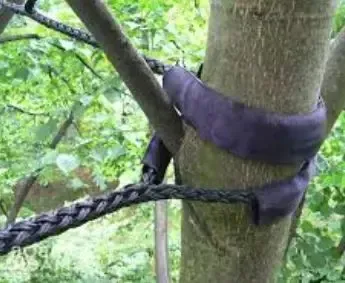
When Cabling Saves a Split Tree in Longmont CO Yards
A mature shade tree anchoring your Longmont backyard can split along a co-dominant stem or a weakened crotch after a heavy spring snowstorm, a summer hailstorm, or simply decades of uneven growth. When that happens, the instinct is often to call for removal. But experienced arborists frequently find that a well-placed cable system can preserve the tree, protect the property below it, and buy that tree decades of additional structural life. The decision is not automatic, though. It depends on the species, the wound condition, the degree of split, and what stands in the failure zone.
What a Co-Dominant Stem Actually Means for Your Tree
Most splitting problems trace back to a co-dominant stem structure, where two or more trunks of roughly equal diameter grow upward from a single union. Unlike a true central leader with smaller lateral branches, co-dominant stems compete for the same attachment point. Over time, included bark forms in the crotch — bark tissue trapped between the two stems rather than forming a solid wood connection. Included bark creates a mechanically weak seam that can split under load.
In Longmont, cottonwoods, silver maples, and large ornamental pears are frequent candidates for this pattern. Boulder County's climate adds another complication: late-season wet snow in April or May can accumulate quickly on leafed-out canopies, adding hundreds of pounds of unexpected load exactly when co-dominant stems are under their most stress. If you have noticed a tree in your yard with two large stems angling outward at roughly equal angles, that geometry deserves an arborist's eye before the next snowfall.
Reading the Split to Determine Whether Cabling Is Viable
Not every split qualifies for cable support. An arborist performing a structural assessment will look at several indicators before recommending hardware installation.
Wound depth and age: A fresh split that has not yet begun to decay may seal successfully around cable hardware. Old splits with extensive rot columns often cannot support cable anchors reliably.
Wood integrity at the anchor zone: The cable attaches well above the crotch, typically two-thirds of the way up the stem. Sound wood must be present at that height on both stems.
Lean and failure zone: If a stem has already begun to lean significantly toward a structure, a cable reduces dynamic load but may not eliminate risk entirely.
Species wound response: Some species, particularly elms and oaks common to older Longmont neighborhoods, compartmentalize decay efficiently. Others, like Bradford pears and silver maples, extend decay columns more readily.
A tree that passes this assessment is a strong candidate for Tree Cabling & Bracing rather than removal. One that fails multiple criteria may need crown reduction, partial removal of the weaker stem, or full removal depending on the risk level.
Hardware Options and Why They Matter
Cabling systems have evolved considerably over the past two decades. The two primary categories are steel strand cables and synthetic rope systems, and each has appropriate applications.
Steel strand cable is the traditional choice. It is high-strength, predictable in load rating, and compatible with threaded eyebolts drilled through the stem. Steel systems are considered static — they limit movement but do not allow much dynamic flex. This is appropriate for trees with severe structural compromise where limiting any sway matters most.
Synthetic rope systems, typically made from high-strength polyester or similar materials, allow more dynamic movement. They mimic the natural flex of a tree better than steel and are often preferred by arborists who want to preserve the tree's ability to respond to wind load, which promotes stronger wood development over time. They attach to padded slings or eye-through bolts and are less damaging to the bark during installation.
Your arborist will also assess whether bracing rods are needed in addition to cabling. Rods are threaded steel hardware installed through the split zone itself to draw cracked wood together and resist further parting. Cabling alone limits dynamic sway; bracing rods address the structural gap at the split point directly. Together they form a complete system for the most compromised unions.
Inspection Cycles and Long-Term Management
Installing cable hardware is not a one-time fix that allows you to stop paying attention. Any cabled tree requires periodic inspection to confirm the system is performing as intended. Standard guidance from the ISA and ANSI A300 tree care standards recommends inspection at least every two years for cabled trees, and annually for trees in high-use areas or those with significant failure consequences.
During an inspection, a qualified arborist checks several things. They confirm the cable or rope shows no fraying, corrosion, or anchor point loosening. They examine the wood around hardware for signs of girdling, where the tree's growth has begun to engulf the hardware improperly. They also reassess the overall structural condition of the tree because a cabled tree continues to grow and change, and what was adequate support five years ago may need adjustment.
In Longmont, where late spring snowstorms are a near-annual event in some years and summer thunderstorms can drop significant wind gusts across open lots and older residential streets, inspecting cabled trees after major weather events is a smart additional practice. For more on tree cabling in Longmont, including how local conditions shape installation decisions, the detail on specific inspection protocols and seasonal timing is worth reviewing.
Common Misconceptions About Tree Cabling
One of the most persistent myths is that cabling guarantees a tree will never fail. It does not. Cabling reduces dynamic load and limits the range of motion that causes splits to worsen, but it does not replace sound wood, eliminate internal decay, or offset an extreme load event. A properly installed, well-maintained cable system significantly reduces risk; it does not eliminate it.
Another misconception is that any cable or strap available at a hardware store will work for this application. It will not. Residential-grade tie-down straps are not rated for the forces involved in a large co-dominant stem under snow or wind load. Professional cabling uses hardware with known load ratings calibrated to the tree's canopy size and wind exposure.
When Cabling Is Not the Right Answer
Some splits are simply beyond what cable support can safely address. If the included bark seam has already opened several inches and the wound shows deep decay on both sides, if one stem has a significant structural lean toward a home or power line, or if the tree is located over a frequently occupied area and the failure consequences are severe, removal of the compromised stem or the full tree may be the responsible choice. Cabling is a tool for trees that still have structural integrity worth preserving, not a universal alternative to necessary removal.
Getting the Right Assessment for Your Longmont Tree
If you have a co-dominant tree that has begun to split, the best starting point is an on-site structural assessment from a certified arborist familiar with Front Range species and local weather patterns. Longmont's urban canopy is full of mature trees worth saving when the structural math supports it. The goal is always to keep a tree safe, healthy, and appropriate for its site — whether that means cabling it, pruning one stem, or occasionally letting it go and planting something better suited to grow strong from the start.
