Storm Cleanup Triage for Boulder County Property Owners
Boulder County storms do not announce themselves politely. A late-afternoon thunderstorm rolling off the Front Range can drop two inches of rain, deposit baseball-sized hail, and push sustained gusts past sixty miles per hour — all before dinner. When the weather breaks, property owners step outside to find a yard that looks nothing like what they left. The instinct is to start cleaning up immediately, but that urgency can get people hurt. A structured triage approach — sorting threats by severity before touching a single branch — is the safer and more cost-effective path forward.
Understanding Storm Damage Categories in Boulder County
Not all storm damage is equal, and treating it as such wastes time and money. After any significant weather event across Boulder County, damage generally falls into three tiers.
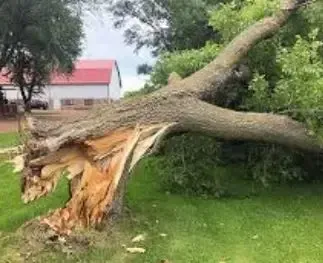
Tier one: Active hazards. These are conditions with immediate injury or property-damage potential. Think of a large limb hanging at an angle, still connected to the tree but balanced over a roof, walkway, or car. Think of a tree that has partially uprooted and is now leaning against a fence line or utility structure. Think of a split trunk held together by a thin strip of bark. These situations do not wait. Everyone should stay clear of the affected area until a professional assesses and removes the threat.
Tier two: Structural damage requiring prompt attention. This covers trees or limbs that have already fallen but created secondary problems — a limb sitting on a fence, a root ball that has shifted a walkway slab, debris blocking a drainage path that will flood your basement if the next storm arrives. These are not immediate emergencies but should be resolved within forty-eight to seventy-two hours.
Tier three: Cosmetic damage. Scattered small branches, torn leaves, surface bark scrapes, and minor tip dieback fall here. These are genuine cleanup tasks, but they pose no threat and can be handled on your schedule over the following days or weeks.
Walk the Property Before You Touch Anything
The single most important step after a Boulder County storm is a deliberate walk of your entire property — but done from a safe distance. You are looking, not touching. Keep the following questions in mind as you go:
- Is any part of a tree or large limb making contact with your roof, siding, or any attached structure?
- Are there hanging branches overhead anywhere near your path of travel?
- Has any tree visibly shifted its lean compared to its normal position?
- Is root heaving visible around the base of any tree — soil lifted, cracking, or a gap forming on the uphill side?
- Are any downed limbs or trunks in contact with a fence line that also carries utility wires?
If you answer yes to any of those questions, mark that area off with flagging tape or a physical barrier, and get a qualified arborist on-site before proceeding. In Longmont and the surrounding Boulder County communities, the window between one Front Range storm system and the next can be very short in summer — which is exactly why professional assessment should happen immediately rather than after a few days of waiting.
Hanging Limbs Are the Most Underestimated Hazard
A hanging limb — what arborists call a widow-maker — is the most dangerous and most frequently ignored form of storm damage. It looks stable because it has not fallen yet. That stability is deceptive. Wind, vibration from a passing vehicle, or someone walking beneath it can release the limb in an instant. Weight and trajectory are unpredictable once it moves.
Longmont and the northern Boulder County corridor are home to mature cottonwoods, silver maples, and box elders — all species that tend to develop large, heavy branch scaffolds over decades. When a storm breaks one of these branches partially, the hanging mass can weigh hundreds of pounds. No homeowner should attempt removal without proper rigging equipment and training. This is one of the most common call types for Emergency Tree Service crews, and for good reason.
When a Crane Crew Is the Right Call
Most storm cleanup involves chainsaws, hand tools, and chippers. But certain situations in Boulder County genuinely require crane-assisted removal, and recognizing them early saves both time and additional property damage.
You likely need crane equipment when a large-diameter tree has fallen against a structure and cannot be sectioned in place without increasing the load on that structure. You also need it when a tree has uprooted but is still partially standing and leaning toward a house, fence, or neighboring property — and there is no clear felling direction away from obstructions. Crane crews work with a lift operator and a ground crew to control descent precisely, removing risk to surrounding structures and other trees.
In older neighborhoods in Longmont, Niwot, and the unincorporated Boulder County areas, mature trees frequently grow close to homes, outbuildings, and fencing. That proximity is part of what makes those neighborhoods feel established and appealing — and it is exactly what makes post-storm removal technically demanding.
What to Document Before Any Cleanup Begins
Before removing anything from the site, photograph the full extent of the damage from multiple angles. Walk the perimeter of every affected tree and photograph the root zone, the trunk, and any contact points with structures. If a limb came down on a fence, roof, or vehicle, photograph that contact from multiple distances. This documentation supports insurance claims, establishes a record of pre-cleanup conditions, and helps a tree care professional assess whether structural damage to the remaining tree warrants full removal versus pruning.
For those dealing with a more serious situation, the information in more on tree fell in Longmont covers the specific steps and considerations when storm damage involves a tree that has made contact with a residential structure.
Sorting DIY Work from Professional Work
Property owners in Boulder County can reasonably handle cleanup that involves branches under four inches in diameter that have already landed cleanly on the ground, away from structures and utilities. Raking, hauling, and chipping small material is well within homeowner range.
Everything above that threshold — large limbs on the ground near structures, anything still in the tree, anything near a fence with utility attachment, and certainly anything against a roof — belongs with a professional crew. The cost difference between handling it yourself and hiring a qualified team is far smaller than the cost of a medical emergency or structural repair.
Boulder County storm seasons, especially the hail and wind events of late spring and summer, can leave entire neighborhoods assessing damage at the same time. Scheduling professional help quickly after a storm is often the difference between getting on the calendar in the next day or two versus waiting a week or more.
