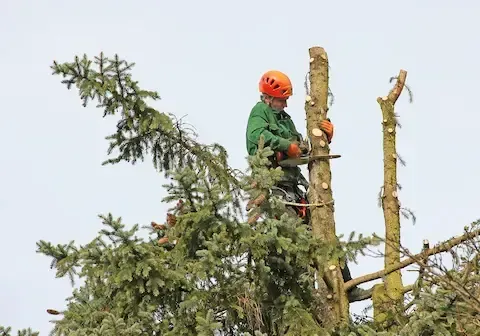
Hazard Tree Warning Signs Every Longmont CO Owner Sees
Trees can become dangerous liabilities when structural problems develop over time. As a property owner, recognizing the early warning signs of a hazard tree can prevent costly damage to your home, vehicles, or neighboring properties. Understanding what to look for allows you to take proactive steps before a compromised tree becomes an emergency situation during Colorado's unpredictable weather patterns.
Visible Crown and Branch Deterioration
The tree crown provides the most obvious indicators of declining health and structural integrity. Dead branches throughout the canopy signal widespread problems that often extend to the trunk and root system. When you notice branches with no leaves during the growing season, bark falling off in large sections, or entire sections of the crown appearing lifeless, these are clear hazard tree signs that require immediate attention.
Broken or hanging branches pose immediate risks, especially after Longmont's frequent spring storms and winter snow loads. Large branches that crack but remain partially attached create unpredictable falling hazards. Even smaller dead branches can cause significant damage when they drop unexpectedly onto cars, roofs, or pedestrians below.
Look for signs of weak branch attachments where limbs connect to the main trunk. V-shaped unions with included bark are particularly vulnerable to failure under stress. These weak connections often develop cracks that widen over time, making the branch increasingly unstable.
Trunk Abnormalities and Structural Defects
A leaning tree doesn't automatically qualify as hazardous, but sudden changes in lean angle indicate root failure or soil movement. Trees that develop a lean after storms, construction activities, or changes in drainage patterns require immediate professional assessment. Fresh cracks in the soil around the base often accompany dangerous trunk movement.
Cavities and decay in the trunk create serious structural weaknesses. Large holes, soft or spongy areas in the bark, and visible rot compromise the tree's ability to withstand wind loads. Fungal growth on the trunk, including mushrooms or bracket fungi, typically indicates advanced internal decay that may not be visible from the outside.
Multiple trunks or co-dominant stems create inherent structural problems. These formations often develop weak unions that split during high winds or under the weight of ice and snow. Cracks between co-dominant trunks widen progressively and eventually lead to catastrophic failure.
For comprehensive assessment of trunk problems, consider professional Tree Removal evaluation to determine if the tree can be salvaged or requires removal.
Root System Complications
Root problems often remain hidden until they cause visible symptoms in the above-ground portions of the tree. Exposed roots that show signs of decay, damage from construction activities, or cuts from utility work can destabilize the entire tree structure. Severed major roots remove critical support and reduce the tree's ability to absorb water and nutrients.
Changes in soil grade around the tree base create stress on the root system. Adding fill soil over roots or lowering the grade can damage the critical root zone and lead to decline. Construction damage to roots, even when not immediately visible, often manifests as crown dieback or increased susceptibility to wind throw months or years later.
Root rot from prolonged wet conditions or fungal infections weakens the tree's foundation. Signs include musty odors around the base, soft or discolored root tissue when exposed, and unusual mushroom growth in the root zone area.
Environmental Stress Indicators
Trees under environmental stress become more susceptible to structural failure and disease problems. Drought stress in Longmont's semi-arid climate can weaken trees over multiple seasons, making them brittle and prone to breaking. Conversely, waterlogged soils from poor drainage or overwatering can lead to root rot and eventual structural instability.
Chemical damage from road salt, herbicides, or construction materials often appears as leaf scorch, premature leaf drop, or dieback in specific areas of the crown. These stressors weaken the tree's overall health and can accelerate the development of other hazardous conditions.
Insect infestations and disease infections create entry points for decay organisms and compromise structural integrity. Mountain pine beetle damage, common in Colorado, can quickly kill trees and leave them as standing deadwood that poses significant falling hazards.
Species-Specific Risk Factors
Different tree species common in Longmont exhibit unique failure patterns and risk characteristics. Cottonwoods, popular along local waterways, are prone to sudden branch failure even when appearing healthy. These fast-growing trees develop weak wood that can break without warning, especially during summer storms.
Pine trees affected by beetle kill become extremely hazardous as they dry out and lose structural integrity. Dead pines can fall with little warning and often take down other trees or power lines in their path. The brittle nature of beetle-killed trees makes them unpredictable and dangerous.
Ash trees, whether affected by emerald ash borer or not, require careful monitoring for signs of decline. These trees can deteriorate rapidly once problems begin, transitioning from healthy appearance to hazardous condition within a single growing season.
Immediate Action Steps
When you identify potential hazard tree signs on your property, document the problems with photographs and notes about when you first noticed the issues. This information helps professional arborists assess the progression of problems and develop appropriate management strategies.
Restrict access to areas beneath suspicious trees, especially during windy conditions or storms. Remove vehicles, outdoor furniture, and other valuable items from potential falling zones until professional assessment can be completed.
Contact certified arborists for evaluation rather than attempting to diagnose complex tree problems yourself. Professional assessment considers factors like species characteristics, local soil conditions, weather patterns, and proximity to structures that affect risk levels.
Learn more on tree removal in Longmont to understand the process and timeline for addressing hazardous trees on your property.
Professional Assessment Benefits
Certified arborists use specialized tools and techniques to evaluate tree health and structural integrity beyond what visual inspection reveals. Resistograph drilling, sonic tomography, and other diagnostic methods can detect internal decay and structural problems not visible from outside examination.
Professional evaluation considers the tree's proximity to structures, power lines, and high-traffic areas when determining risk levels. A tree that might be acceptable in a remote location could pose unacceptable risks near homes, parking areas, or walkways in Longmont neighborhoods.
Risk assessment also factors in local weather patterns, including Longmont's chinook winds, sudden thunderstorms, and heavy wet snow events that can trigger tree failure. Understanding these environmental factors helps determine appropriate management strategies for borderline cases where removal might not be immediately necessary.
