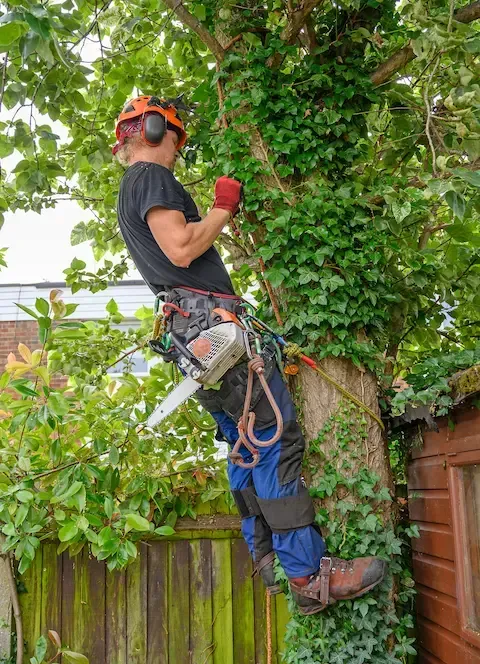
Spring Tree Health Checks for Longmont CO Properties
A spring tree health check in Longmont, CO means walking your yard in March or April to spot early warning signs before problems escalate. Look for swelling buds, intact bark, healthy root flares, and balanced canopy leafing. Compare what you see now to how the tree looked last fall. Longmont's clay-heavy soils, dry winters, and late frost events add specific stressors worth checking for. Most inspections take under 20 minutes per tree. Flag anything unusual and call a certified arborist if you find dead wood, oozing bark, or one-sided leafing. Early action saves trees and avoids costly removals later.
Step 1: Check Bud Break and Canopy Leafing
Stand back from the tree and look at the whole canopy. By mid-April in Longmont, most deciduous trees should be showing visible bud swell or early leaf emergence. Walk around the full perimeter — not just the side facing your house. Watch for sections of the canopy where buds are still closed, shriveled, or absent while the rest of the tree is leafing out. One-sided or patchy bud failure often signals a structural root problem, a past injury, or early vascular disease. Cottonwoods, maples, and lindens are common street trees in Longmont neighborhoods and should show fairly even canopy response. If more than 20 percent of a tree's crown is lagging, that section warrants a closer look.
Step 2: Inspect Bark for Cracks, Splits, and Weeping Spots
Move in close and work your way around the full trunk from the root flare up to the first major branch unions. You are looking for vertical cracks, frost cracks from Longmont's late-season temperature swings, sunscald on south-facing trunk faces, and any weeping, oozing, or discolored bark. A small amount of sap weep near a wound site is normal, but dark liquid or foam with an unpleasant smell can indicate bacterial wetwood or borer activity. Check ash trees carefully — emerald ash borer creates S-shaped galleries just beneath the bark and causes vertical bark splits as populations grow. Aspen groves in and around Longmont are also susceptible to cytospora canker, which shows as sunken, discolored bark patches often appearing in spring.
Step 3: Examine the Root Flare at Ground Level
The root flare is where the trunk visibly widens as it meets the soil. It should be visible. If the base of the tree looks like a telephone pole going straight into the ground, the tree may have been planted too deep or has accumulated excess mulch or soil over time — a common issue on newer Longmont developments where grading changes happen after planting. Buried root flares restrict oxygen exchange, invite fungal decay, and weaken the anchor root system. Use a gloved hand or a stick to probe the soil immediately around the trunk. If you find soft, mushy wood at or just below the soil surface, that is a significant structural concern. Tree Health Care services can assess whether a root crown excavation and soil correction will stabilize the tree.
Step 4: Look for Pest and Disease Entry Points
Spring is when insect activity resumes. Look for small round exit holes in the bark — roughly the size of a pencil tip for borers, or larger D-shaped holes for emerald ash borer. Check branch crotches for egg masses from tent caterpillars, which appear as shiny dark foam wrapped around small branch forks. Examine leaf buds as they open: distorted, cupped, or discolored new leaves can indicate aphid colonies, mite pressure, or early fungal infection. Longmont's Front Range climate creates dry springs that stress trees, making them more vulnerable to opportunistic pests. If you find evidence of boring insects, do not delay — these infestations spread quickly and are far more manageable when caught early.
Step 5: Assess Structural Branch Angles and Codominant Stems
Look up into the canopy at the major branch unions. Branches that form a narrow V-shape with the trunk, rather than a wider U-shape, carry included bark — a structural weakness that can lead to sudden branch failure under summer storm loads or heavy snow in Longmont's unpredictable spring weather. Codominant stems (two equally sized trunks growing from the same point) are common in rapidly growing trees and carry the same risk. Flag any branches over the roofline, driveway, or play areas that show this structure. Cabling or bracing installed by a certified arborist can extend the safe life of these trees significantly without full removal.
Step 6: Note Soil Conditions and Recent Site Changes
Trees respond to what happens underground, often months or seasons later. Walk the area under the canopy — the drip zone — and note any compaction from foot traffic, vehicles, or heavy equipment. Check whether any trenching, grading, or construction occurred within the last year near the tree. Longmont's older neighborhoods often see utility work or curb replacement that cuts through surface roots without obvious immediate symptoms. If leaves were yellowing last summer, especially on maples and oaks, review the iron chlorosis walkthrough for Longmont — Longmont's alkaline soil frequently locks out iron, and spring is the right window to apply soil amendments before the growing season accelerates.
Step 7: Document What You Find and Set a Follow-Up Date
Take dated photos of any flags you identified: bark splits, missing bud break zones, root flare burial, or structural branch concerns. A simple phone photo with location context gives an arborist a useful baseline and helps you track whether a condition is stable or worsening. Set a calendar reminder for six weeks out to recheck any flagged trees. If a tree is still showing no leaf emergence by early May in Longmont, or if you identified boring activity, oozing bark, or soft wood at the root crown, schedule a professional assessment before summer heat stress layers onto an already compromised tree. Early diagnosis is consistently the most cost-effective outcome.
